Reviewing the Au-some Autism Teacher Design
As a designer who spends more time staring at stitch maps than actual fabric, I have learned that not every graphic translates well into thread. When I first pulled up the Au-some Autism Teacher PNG Sublimation file, my initial reaction was one of cautious optimism. The theme is undeniably relevant and heartwarming, targeting a specific niche of educators and advocates who wear their pride on their sleeves—literally. However, moving from a digital Graphics file to a tangible handmade product requires a critical eye. This review breaks down how this design performs in real-world scenarios, specifically for those of us running a craft business or creating personalized gifts.
First Impressions and Visual Personality
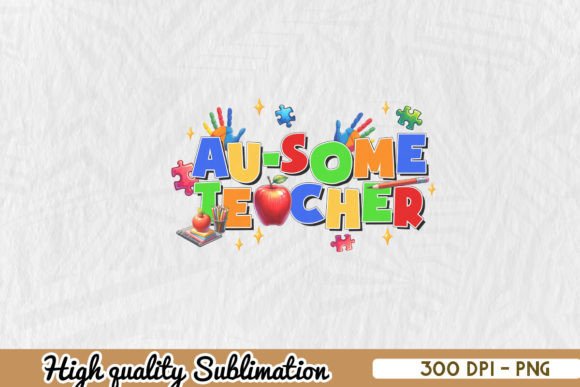
The mood of the Au-some Autism Teacher PNG Sublimation is playful yet professional. It strikes a balance between fun and respectful advocacy, which is crucial when designing for sensitive topics like autism awareness. The layout appears clean, with bold lines that suggest it would hold up well against the texture of fabric. For an Etsy seller or small shop owner, visual clarity is everything. Customers scrolling through listings need to instantly recognize the message. This design achieves that immediate recognition.
From a technical standpoint, because this is marketed primarily as a sublimation PNG, it relies on color gradients and sharp edges. When we consider adapting this for embroidery, we must think about how those gradients translate to thread colors. A direct conversion might lose some nuance, so a skilled digitizer would need to simplify the color palette to ensure the "Au-some" pun remains legible without becoming a muddy mess of mixed threads.
Real-World Application: The Custom Tote Bag Scenario
To truly test the viability of this design, I imagined a recent client request: a bulk order of canvas tote bags for a local special education department’s end-of-year appreciation event. This is a classic use case for tote bag design. The goal was to create something durable, washable, and visually striking.
If I were using the Au-some Autism Teacher PNG Sublimation strictly as a print, the process is straightforward. However, many of my clients prefer the tactile quality of embroidery. In this scenario, I would use the PNG as a reference to create a custom machine embroidery design. The bold shapes in the original graphic lend themselves well to fill stitch areas, while the text would require careful attention to ensure the letters are not too thin. If the lettering is too delicate, it risks breaking during the washing process, which is a common failure point in custom apparel.
For a project like this, the design fits perfectly on a standard 5x7 or 6x10 hoop. It is large enough to be readable from a distance but compact enough to fit on various items. Whether it is a sweatshirt embroidery piece for a chilly classroom or a patch on a teacher’s lanyard, the scale feels right. The positive reaction from such a project is usually high; teachers appreciate items that acknowledge their specific role and dedication.
Navigating Fabric and Technical Constraints
While the design is strong, there are areas where caution is necessary. If you are working with textured fabrics, such as terry cloth towels or heavy fleece, the details in the Au-some Autism Teacher PNG Sublimation might get lost. In these cases, increasing the stitch density slightly can help, but one must be careful not to make the fabric stiff or pucker. Using a proper stabilizer is non-negotiable here. A cut-away stabilizer is often best for garments that will undergo frequent washing, ensuring the design remains flat and secure.
Another consideration is dark fabric. Since sublimation files are often designed with white or light backgrounds in mind, placing this design on a navy or black shirt requires adjustment. In embroidery, this means avoiding satin stitches for large areas if possible, as they can look sparse on dark backgrounds. Instead, opting for a dense fill or even considering an applique design approach could save thread costs and improve visibility. An applique method would involve stitching a fabric shape underneath the design elements, which adds dimension and solves the contrast issue effectively.
Curved surfaces, like caps or hats, present another challenge. The Au-some Autism Teacher PNG Sublimation has a horizontal layout. Placing this on a curved cap brim or front panel requires distorting the design slightly to compensate for the curve. Without this adjustment, the text might appear to bow or warp when viewed head-on. For embroidered patch creation, however, this is less of an issue, as patches are typically stitched on flat fabric before being applied.
Enhancing Product Value and Brand Consistency
For small shop product lines, consistency is key. Using a high-quality base file like this allows for a cohesive look across different items. Imagine offering a bundle: a mug with the sublimated PNG, a tote with the embroidered version, and a set of cards. This cross-platform usage maximizes the value of the original design assets. It shows customers that your brand pays attention to detail and offers versatile options.
The perceived value of an embroidered item is generally higher than a printed one. By taking the Au-some Autism Teacher PNG Sublimation concept and executing it with precise stitching, you elevate the finished product. It moves from a simple commodity to a keepsake. This is particularly important for holiday embroidery gifts or end-of-year presents, where emotional connection drives purchasing decisions. A well-executed design builds customer trust and encourages repeat business.
Practical Notes for the Embroidery Designer
Before committing to a full production run, always test the design on scrap fabric. This is the golden rule. Check how the running stitch underlays interact with your specific fabric type. If you are digitizing this from the PNG yourself, pay close attention to the corners of the letters. Sharp corners can pull and distort if not anchored properly with tie-offs or triple stitches.
Also, verify the licensing terms. While the description mentions it is easy to create your own projects, always confirm whether the license covers commercial sales of physical items versus digital redistribution. As an Etsy seller, you need to be clear on what you are allowed to sell. If you are selling the digital embroidery file itself, you must have explicit rights to do so. If you are selling the handmade product, ensure the license permits commercial use of the finished goods.
Finally, consider creating a printable mockup to show customers how the design looks on different items before you stitch a single thread. This helps manage expectations and reduces the likelihood of returns due to size or placement misunderstandings. Whether you are making baby embroidery items or adult custom apparel, seeing the design in context helps buyers visualize the final result.
In conclusion, the Au-some Autism Teacher PNG Sublimation is a solid foundation for a variety of creative projects. With careful attention to stitch types, fabric choices, and licensing, it can become a standout item in any crafts portfolio. It is not just about putting a design on a shirt; it is about creating a meaningful connection through quality craftsmanship.